Choosing the right logo application method is just as important as choosing the uniform itself. Embroidery, DTF and screen printing can all produce professional results, but they differ in appearance, artwork capability, production setup, fabric compatibility and how they behave during everyday wear.
When comparing embroidery vs DTF vs screen printing for company uniforms, there is no single method that is best for every project. A small corporate logo on a polo shirt has very different requirements from a large multi-colour graphic on an event T-shirt. The right choice starts with understanding what each process actually does.
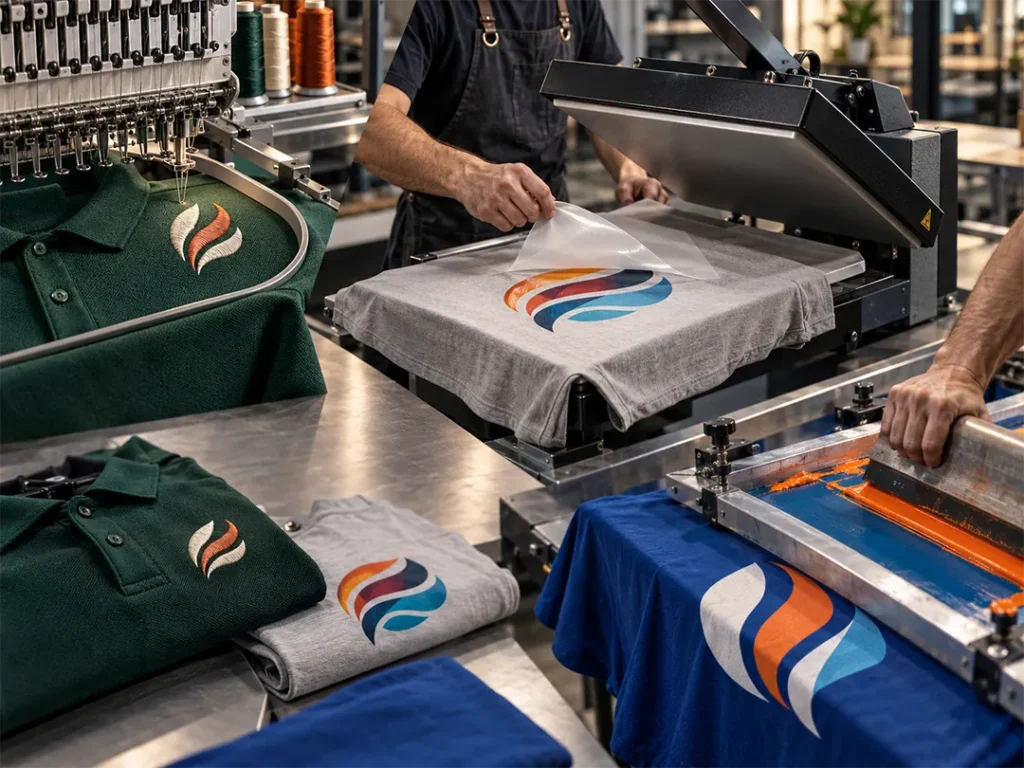
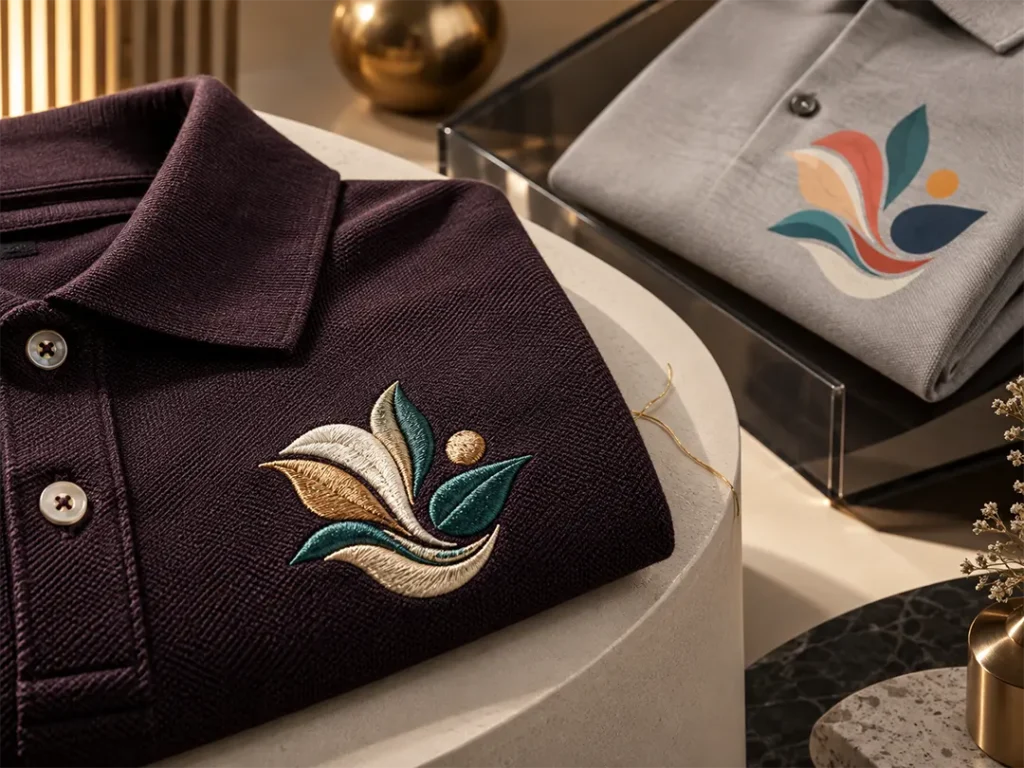
Embroidery creates a logo by stitching thread directly into the garment. Because the design has physical thread and texture, embroidery creates a dimensional finish commonly associated with corporate polo shirts, button-up shirts, jackets and workwear.
Embroidery pricing is influenced by factors such as stitch count, design size, complexity and quantity, rather than simply the number of colours in the artwork.
Embroidery works particularly well for:
However, embroidery is not ideal for every artwork. Very small lettering, fine gradients and photographic details may need to be simplified before they can be reproduced effectively with thread.
DTF, or Direct-to-Film printing, involves printing artwork onto a transfer film, applying adhesive powder, curing the transfer and then using heat and pressure to apply the design to the garment.
One of DTF’s main advantages is its ability to reproduce detailed, multi-colour artwork without preparing a separate screen for every colour. This makes it useful for logos containing gradients, fine details or multiple colours, particularly when order quantities do not justify traditional screen setup.
DTF is useful for:
Screen printing transfers ink through a prepared mesh screen onto the garment. Traditionally, each colour in the design requires its own screen and printing stage.
Because much of the preparation happens before printing begins, screen printing becomes particularly efficient when the same artwork is repeated across a larger quantity of garments. This is why it remains widely used for company T-shirts, promotional uniforms and event apparel.
Screen printing works well for:
For very small orders or artwork containing many colours, the setup requirements may make other methods more practical.
| Factor | Embroidery | DTF | Screen Printing |
|---|---|---|---|
| Finish | Textured Thread | Printed Transfer | Ink Print |
| Fine Detail | Limited–Good | Excellent | Good |
| Gradients | Limited | Excellent | More Complex |
| Small Chest Logo | Excellent | Excellent | Suitable |
| Large Back Design | Less Practical | Suitable | Excellent |
| Small Quantity | Suitable | Very Suitable | Less Efficient |
| Large Quantity | Suitable | Suitable | Very Efficient |
| Typical Look | Premium / Corporate | Detailed / Modern | Clean / Bold |
The comparison shows why choosing only based on price can be misleading. The artwork, garment and production quantity should be considered together.
Fabric compatibility is an important part of the decision. Cotton, polyester, blended fabrics and performance materials react differently to thread, ink, adhesive, heat and pressure.
| Garment / Fabric | Commonly Suitable Methods |
|---|---|
| Cotton T-Shirt | Screen Printing / DTF / Embroidery |
| TC Cotton Polo | Embroidery / DTF / Screen Printing |
| Polyester Polo | Embroidery / DTF* |
| Performance Fabric | DTF* / Embroidery* |
| Jacket | Embroidery / Suitable Transfers |
Testing may be required. Heat-sensitive fabrics can react to transfer temperatures, while certain polyester materials can experience dye migration into printed areas.
This is why professional production should consider the specific garment, not simply assume one method works identically on every polyester or cotton fabric.
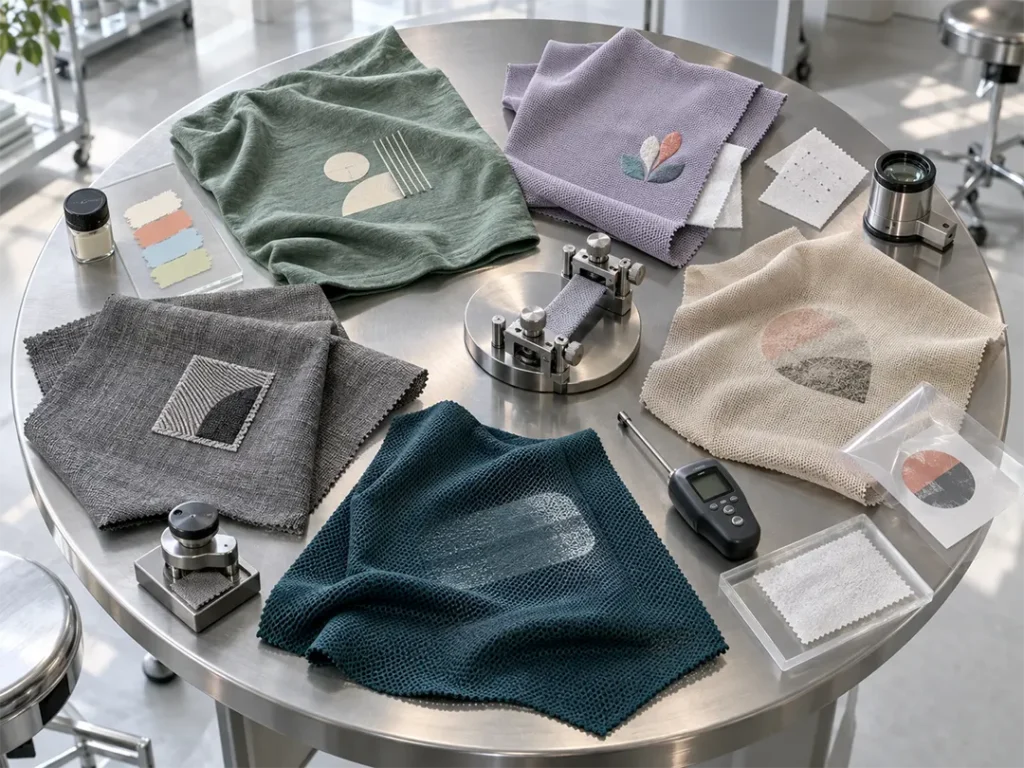
Embroidery is known for strong durability because the design is physically stitched into the garment. However, good screen printing and DTF can also provide durable results when correctly produced and properly cared for.
Print durability depends on several variables: ink or transfer quality, curing conditions, fabric compatibility, washing temperature, drying method and how frequently the garment is worn.
For this reason, claims such as “one method always lasts longer” oversimplify the issue. A poorly executed embroidery or print can fail earlier than a professionally produced alternative.
Choose embroidery when you want a premium, textured logo on corporate polos, shirts or jackets.
Choose DTF when your artwork contains many colours, gradients or fine details, particularly for smaller or mixed production quantities.
Choose screen printing when you have simpler artwork and need to repeat the same design across a larger quantity of garments.
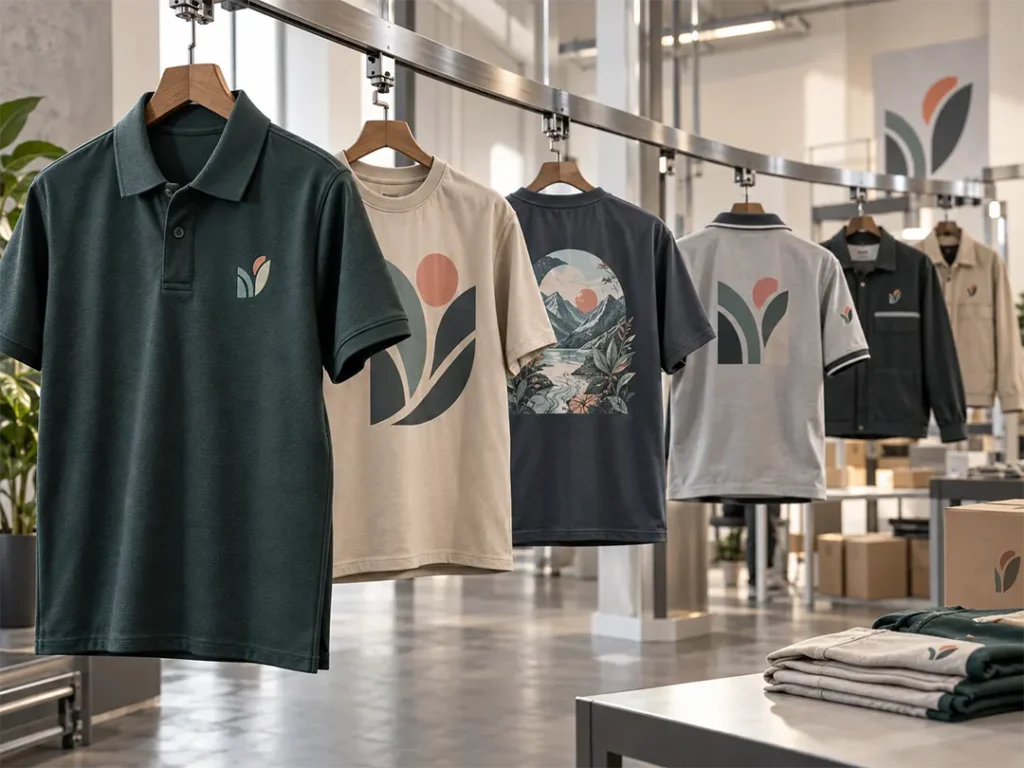
Businesses can also combine methods. For example, a polo shirt may use embroidery for the company logo on the chest and screen printing or DTF for a larger campaign design on the back.
Not necessarily. Embroidery is well suited to premium corporate logos, while DTF can reproduce more complex full-colour artwork. The better method depends on the logo, garment and desired appearance.
It depends on quantity and artwork. Screen printing can become highly cost-effective when the same limited-colour design is produced in larger quantities, while DTF may be more practical for smaller quantities or artwork containing many colours.
It can be used on many polyester garments, but testing is important. Heat sensitivity and dye migration can affect the finished result on certain polyester fabrics.
When comparing embroidery vs DTF vs screen printing for company uniforms, the right choice depends on more than appearance. Logo complexity, fabric, design size, production quantity, working environment and maintenance requirements should all influence the decision.
Rather than selecting a method first, start with the actual uniform and artwork. A professional uniform printing company in Malaysia can then determine which production method will reproduce the design effectively while remaining practical for everyday use.