
Choosing the right colour for your company uniform is an important part of creating a professional and recognisable brand image. The colours your employees wear can influence how customers perceive your business while also affecting practicality, comfort, and everyday maintenance.
Instead of simply choosing your favourite colour, consider your existing brand identity, industry, working environment, and employee roles. Here are the key factors to consider when selecting colours for your corporate uniforms.

Your company uniform should feel connected to your overall brand identity. Start by reviewing the colours already used in your logo, website, signage, packaging, and marketing materials.
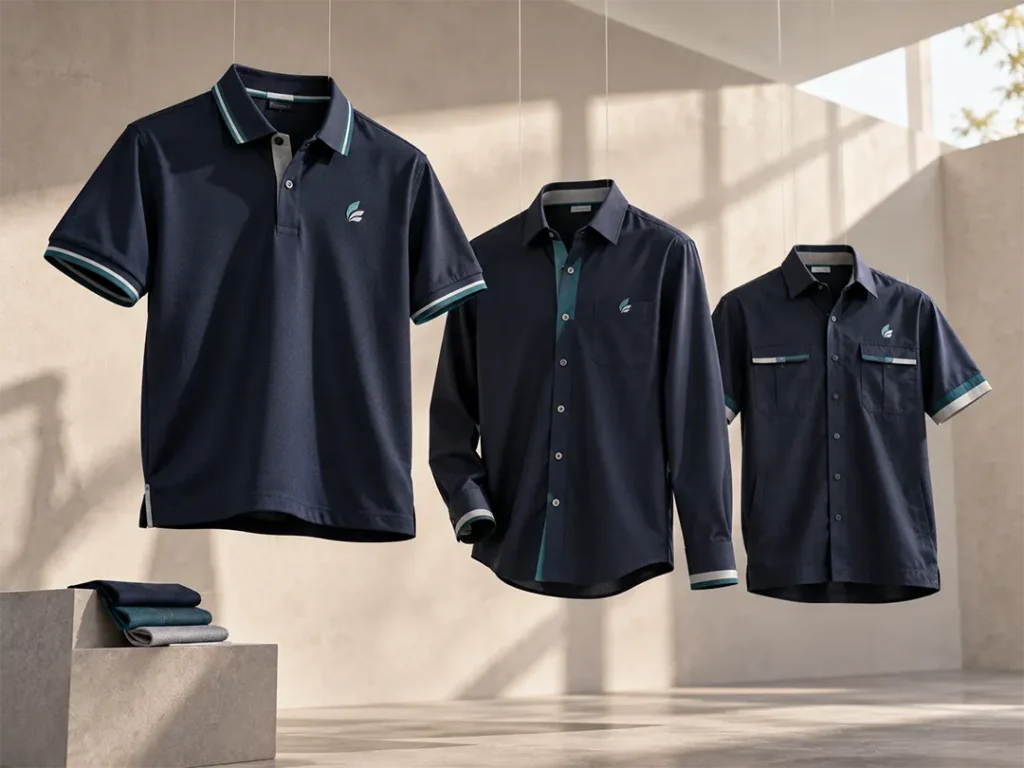
You do not need to use your primary brand colour across the entire garment. Sometimes a neutral uniform with brand-coloured accents creates a cleaner and more professional result.
Colours can create different visual impressions. While colour perception varies by context, the following associations can help guide your initial uniform design.
| Colour | Common Impression | Suitable For |
|---|---|---|
| Navy Blue | Professional & Reliable | Corporate, Service |
| Black | Modern & Premium | Retail, Hospitality |
| White | Clean & Simple | Office, Healthcare |
| Grey | Neutral & Contemporary | Corporate, Technology |
| Green | Fresh & Natural | Wellness, F&B |
| Red | Energetic & Bold | Retail, Events |
The best choice should still reflect your actual brand rather than selecting a colour based only on general colour associations.

The working environment should influence your colour choice. A formal corporate office may benefit from navy, white, or grey, while a modern cafe or retail brand can use stronger colours to create a more distinctive identity.
| Industry | Colour Ideas |
|---|---|
| Corporate Office | Navy, Grey, White |
| Restaurant & Cafe | Black, Brown, Brand Colours |
| Hotel | Navy, Black, Neutral Tones |
| Retail | Brand Colours |
| Healthcare | White, Blue, Soft Tones |
| Factory & Industrial | Navy, Grey, Dark Colours |
A colour may look attractive in a catalogue but be difficult to maintain in everyday working conditions. Employees in restaurants, factories, workshops, and outdoor environments may benefit from darker or mid-tone colours that make everyday marks less noticeable.
For customer-facing environments where cleanliness is part of the brand experience, lighter colours can work well but may require more frequent washing and maintenance.

Your uniform colour should provide enough contrast for your company logo to remain clear and recognisable. A dark logo may disappear on a dark shirt, while very light branding can become difficult to see on white garments.
Always review a digital mock-up or physical sample before approving bulk production.
Using too many colours can make a corporate uniform look busy and inconsistent. In most cases, one main garment colour combined with one or two accent colours is enough to create a distinctive design.
A simpler colour palette also makes future reorders easier and helps maintain consistency across different departments.
There is no universal best colour. Navy, grey, black, and white are versatile professional options, but the ideal colour should match your company’s branding and working environment.
Not necessarily. The uniform can use a neutral base colour while incorporating logo colours through embroidery, collars, sleeves, or other subtle details.
Dark colours can be practical because everyday stains and marks may be less noticeable. However, fabric, working conditions, heat exposure, and brand identity should also be considered.
Knowing how to choose the right colour for your company uniform starts with your brand identity, but it should also consider industry, practicality, maintenance, and logo visibility. The strongest designs usually use a simple colour palette that employees can wear comfortably while customers can easily associate with your business.
Before confirming production, compare fabric swatches and request a design mock-up from your uniform supplier in Malaysia to ensure the final colours work well with your logo and overall corporate identity.