Getting employee sizing right is one of the most important parts of ordering company uniforms. An incorrect size does more than affect appearance—it can restrict movement, reduce comfort and result in costly exchanges or reorders after production is complete.
Knowing how to choose the right uniform size for employees requires more than asking everyone whether they normally wear S, M or L. Garment measurements, body shape, uniform style, fabric behaviour and job responsibilities should all be considered before a bulk order is confirmed.
One of the most common uniform-ordering mistakes is assuming that size labels are universal. They are not. A Medium polo shirt from one manufacturer may have different chest width, shoulder width or garment length from a Medium produced by another supplier.
Different garment styles can also fit differently even when they come from the same manufacturer. A regular-fit polo, slim-fit corporate shirt and unisex T-shirt may all use different measurements.
For this reason, employees should select their size using the specific size chart for the garment being ordered, rather than relying only on their usual clothing size.
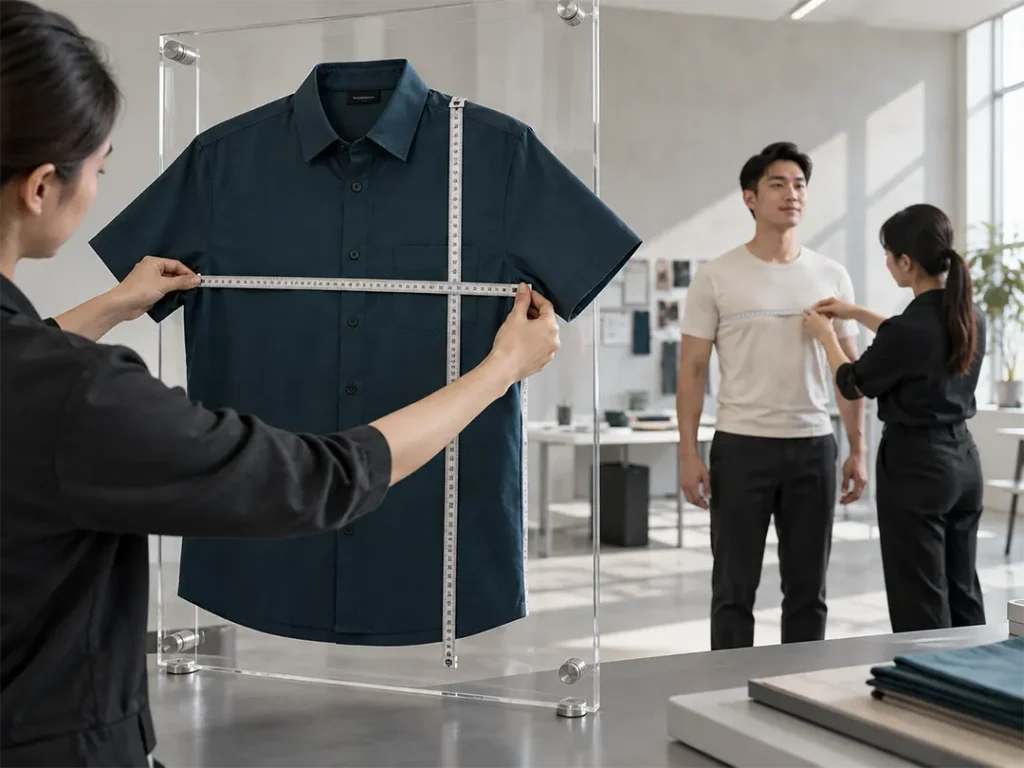
Another common source of confusion is the difference between body measurements and garment measurements.
Body measurements are taken directly around the employee’s body. Garment measurements refer to the dimensions of the finished shirt itself.
| Measurement | What It Checks | Why It Matters |
|---|---|---|
| Chest | Width around upper body | Overall fit and movement |
| Shoulder | Shoulder-to-shoulder width | Prevents pulling or oversized fit |
| Waist | Mid-body measurement | Important for fitted garments |
| Shirt Length | Shoulder to hem | Ensures suitable coverage |
| Sleeve Length | Shoulder to sleeve end | Important for long sleeves |
A finished garment normally needs additional room beyond the employee’s exact body measurement. This extra space—often referred to as ease—allows movement and creates the intended fit.
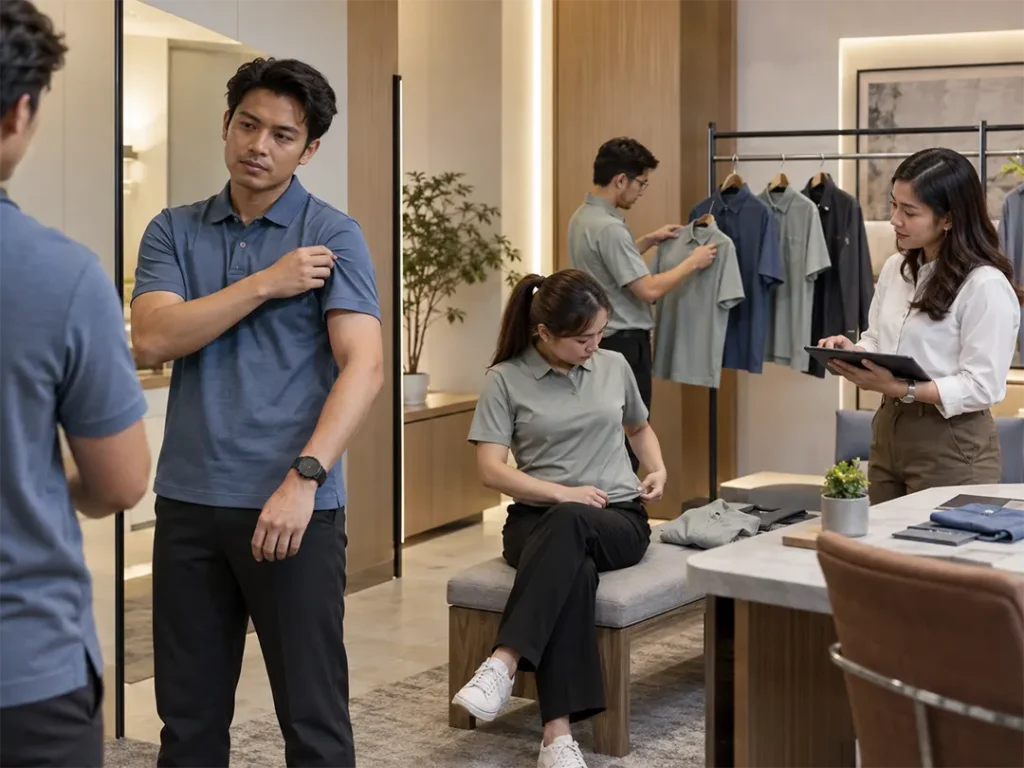
For larger company orders, a physical size set is one of the most reliable ways to reduce sizing problems. A size set contains sample garments across several sizes that employees can try before confirming their final selection.
Sample fitting allows employees to evaluate factors that are difficult to judge from measurements alone:
It is particularly useful when employees have different body shapes or when the uniform uses a fitted cutting.
The correct uniform size is not determined by appearance alone. Employees need enough movement to perform their daily responsibilities comfortably.
A receptionist working mainly at a counter has different movement requirements from a technician who frequently bends, reaches or carries equipment. Likewise, restaurant staff may need more freedom through the shoulders and arms than employees working at desks.
The objective should therefore be appropriate fit, not simply the tightest or most fashionable fit.

Two shirts with identical measurements can feel different when worn because fabrics behave differently.
A knitted polo fabric may provide some natural flexibility, while a structured woven corporate shirt generally has less stretch. Fabrics containing elastane may provide additional movement, whereas some rigid workwear fabrics rely more heavily on garment cutting for comfort.
This is another reason physical fitting is valuable: measurements tell you the dimensions, but they do not fully describe how the garment behaves during movement.
Once employees have confirmed their sizes, create a final size breakdown before submitting the purchase order.
| Size | Employees | Spare Stock | Total |
|---|---|---|---|
| S | 8 | 1 | 9 |
| M | 18 | 2 | 20 |
| L | 15 | 2 | 17 |
| XL | 7 | 1 | 8 |
| 2XL | 2 | 1 | 3 |
Keeping a limited quantity of common sizes can help with new employees, damaged uniforms or unexpected replacements. However, avoid excessive spare stock, especially for customised uniforms containing employee names or department-specific designs.
Yes. Men’s, women’s and unisex garment patterns may use different proportions even when the size label is identical. Women’s styles may have different waist shaping, shoulder proportions or garment lengths, while unisex garments often use a straighter cut.
If your uniform range includes different cuts, employees should check the size chart for their specific garment style, not one general company chart.

Not without checking the supplier’s size chart. Clothing sizes vary between manufacturers and garment styles, so actual measurements or sample fitting provide a more reliable result.
Not automatically. The correct size should provide enough ease for normal movement without creating excessive loose fabric. Job requirements and garment cutting should guide the decision.
Compare the critical measurements and intended fit. If possible, try both sizes physically. For active job roles, sufficient movement through the shoulders, chest and arms should be prioritised.
Knowing how to choose the right uniform size for employees means going beyond S, M and L. Use the garment-specific size chart, understand the difference between body and garment measurements, consider job movement and fabric behaviour, and arrange sample fitting whenever possible.
For bulk company orders, confirming sizing before production is far easier and more cost-effective than correcting mistakes afterwards. A structured sizing process also gives employees uniforms that look professional while remaining comfortable throughout the working day.